
The Venetian Walls of Nicosia: A Visitor's Guide to the Old City Circuit

The Venetian walls of Nicosia are a 16th-century defensive circuit that still rings the old city. Treat them as a route rather than a sight: the bastions, gates and surviving stretches shape the whole of walled Lefkosia, so you can see the walls properly in half a day on foot. This guide covers where the circuit sits, how to reach it, which sights sit inside it and how to shorten the walk in summer heat.
What the Venetian walls of Nicosia are
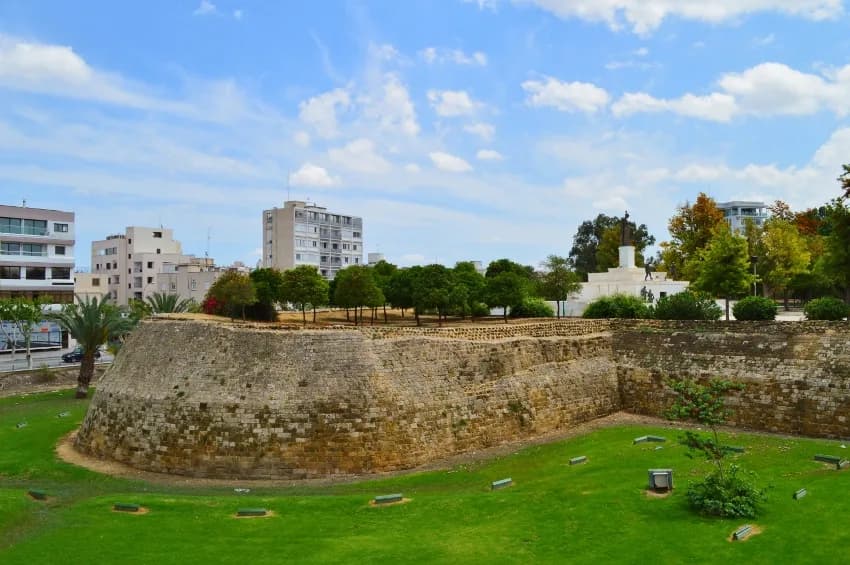
The walls are the Renaissance-era fortifications that enclose the old "Chora", the historic core of Lefkosia. Visit Cyprus describes the city centre as surrounded by 16th-century walls and still holding museums, old churches and medieval buildings in a slow, old-fashioned atmosphere. That is the right mental picture: the circuit is the frame around the sights, not a separate trip out of town.
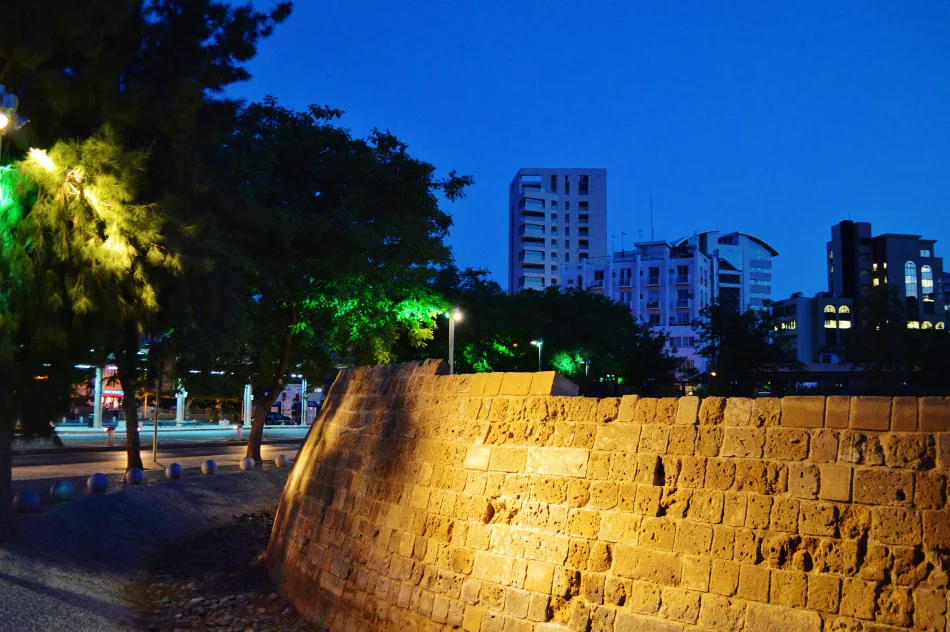
Because the walls were built to enclose a whole city, they read as a loop of angled bastions rather than a single photogenic facade. You can follow long stretches on foot, and the gates and bastions give you reliable landmarks for finding your way through the tangle of lanes. Plan on meeting the walls at several points during a day in the old town instead of hunting for one viewpoint.

Where the walls sit in old Lefkosia
Everything inside the circuit is walkable. Eleftheria Square sits on the southern edge of the walled city and works as the natural arrival point and orientation marker. From there, Laïki Geitonia, the restored traditional neighbourhood used as residences, shops, tavernas and craft centres, lies about 200 m east of Plateia Eleftherias and is an easy first stop on foot.
The Green Line divides the walled city, so the ring of walls crosses from the Republic into the northern part of Lefkosia (Lefkoşa). Crossing is done at designated points rather than over the walls, and Ledra Street is the best-known pedestrian crossing in the centre. Carry your passport if you intend to walk through, and check your hire-car insurance cover before taking a vehicle across.
How to get to the circuit
Start at Eleftheria Square, on the southern side of the walled city, and walk in. The old town is compact enough that the walls, the main squares and the museums sit within a comfortable walking loop. Coming by car, park outside the circuit and walk in, since the lanes inside were never laid out for modern traffic.
Famagusta Gate is one of the historic gates in the circuit and a useful landmark if you approach the old town from the east. It gives you a second fixed point so you can plan a route that starts at one gate and ends near Eleftheria Square rather than backtracking.
Reading the walls on the ground
Walk the circuit slowly and look for the angled bastions that give the plan its star shape, plus the gates that still act as entries into the old town. The walls were built for artillery defence, so their value to a visitor is in the geometry and the way they still channel movement through a handful of openings. A short walk along any straight stretch shows how high and thick the ramparts are.
Much of the circuit is open and exposed, with little shade on the outer face. In summer, walk the walls early or late and save the middle of the day for the museums and covered lanes inside. A hat and water matter more here than on a shaded stroll through Laïki Geitonia.
South side: museums and the traditional neighbourhood
The Byzantine Museum, inside the Archbishopric on Plateia Archiepiskopou Kyprianou, holds the richest collection of Byzantine art on the island, with more than 200 icons from the 9th to the 19th centuries. It opens Tuesday to Saturday 09:30–17:00, is closed on public holidays, and charges individual visitors €7 with reductions for children, pensioners and groups. Hours and fees can change, so confirm before you set out.
Laïki Geitonia is the other obvious south-side stop. Its 18th-century buildings show traditional Cypriot urban architecture, and the restored houses now hold craft centres and tavernas, making it a good place to pause between stretches of wall. Pair it with the museum for a morning that mixes the circuit with indoor time.
North side: what sits inside the northern walled centre
Inside the northern part of the walled city, the former Latin Cathedral of St Sofia now serves as the Selimiye mosque. It is the largest and oldest surviving Gothic church in Cyprus, with interior dimensions of 66 by 21 m, and it took around 150 years to build without ever being fully completed. The Department of Antiquities records that the Ottomans converted it into a mosque in 1570 and added two minarets at the west end.
A short walk south of the cathedral stands the Bedestan, the former Panagia Odegetria church, later a covered market. To the west, Büyük Han was built soon after the Ottoman conquest, possibly in 1572, with a two-storey arcaded courtyard and a small domed mosque added in the 19th century. A little east of the cathedral, the Sultan's Library is a three-domed building from 1829 holding Turkish, Arabic and Persian manuscripts.

The free guided walk of old Lefkosia and its walls
Lefkosia Municipality, the Deputy Ministry of Tourism and the Nicosia Tourism Board run a guided walking tour of the walled city that takes in the walls and the main sights. It starts and ends at the Old Town Hall on Eleftheria Square, runs about 2 hours 45 minutes, is conducted in English and is free. Dates and times are published on a separate programme page, so check that before you build a day around it.
How much time to allow
Give the circuit half a day if you want to walk a good stretch and take in one or two sights. With only an afternoon, pick Eleftheria Square, one walk along a bastion, and either the Byzantine Museum or Laïki Geitonia rather than trying to circle the whole town. The guided walk condenses the old city into under three hours if you prefer a structured route.
If you want to combine the walls with the archaeology of the wider city, the Cyprus Museum sits outside the circuit and makes a natural second half of a full day. Keep the walls for the cooler hours and the museum for the hot middle of the day.
Practical trade-offs
The biggest consideration is heat: the outer face of the walls and the open crossings give little shade, so walk in the morning or late afternoon in summer. The second is the divide. Walled Lefkosia crosses the Green Line, so plan any walking that includes the northern sights around a passport crossing at a designated point, and keep your route simple rather than zig-zagging between the two sides.
Is the wall circuit worth half a day?
Yes, if you treat the walls as the shape of the old town rather than a single monument. Walk a stretch in the cool hours, then drop into the Byzantine Museum, Laïki Geitonia or the northern walled centre depending on how far you want to go. Budget half a day, carry your passport for any crossing and confirm tour dates and museum hours before you go.
Frequently Asked Questions
Who built the walls of Nicosia?
The circuit is a Renaissance fortification enclosing the old "Chora", and Visit Cyprus dates the walls around the centre to the 16th century. The medieval city had earlier walls, which the later scheme replaced. For construction detail, look at the interpretation available in the old town and at the guided walk, which covers how the walled city evolved.
Is Nicosia in the south or the north of Cyprus?
Lefkosia (Nicosia) is the capital and sits centrally in Cyprus, and the walled city is divided by the Green Line. The southern part lies in the Republic of Cyprus, with the euro, and the northern part lies in the north, with the Turkish lira. Crossings are made at designated points with your passport.