
Ledra Street, Nicosia: What to See and How the Crossing Works

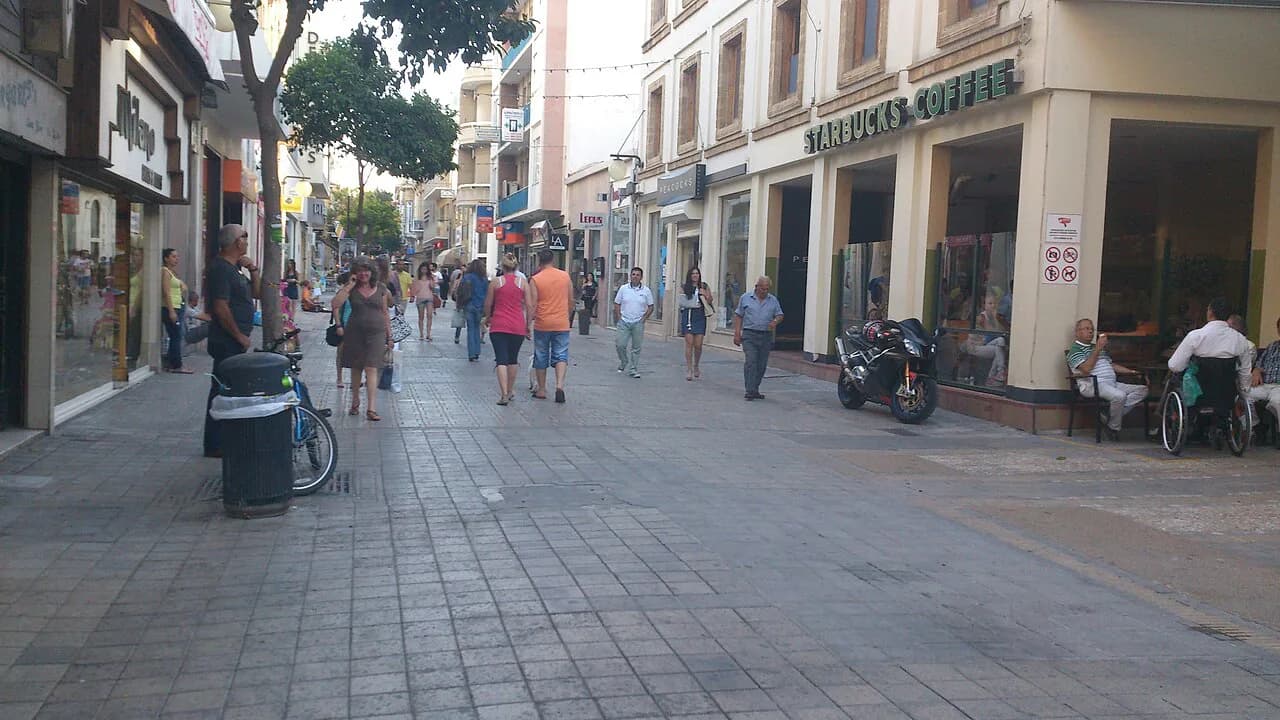
Ledra Street is the pedestrian spine of walled Nicosia and the hinge between the city's two halves: walk it south to north and you reach the Ledra Street crossing point, where the street continues into the northern old town. Allow around two hours for the street and its immediate sights, or half a day if you cross the Green Line and visit the monuments beyond it. This guide covers the layout, what to see on each side of the line, and the practical points that decide how you spend your time.
Nicosia, or Lefkosia, sits practically in the centre of Cyprus and has been the island's capital since the Late Byzantine period, with a walled core laid out under Lusignan and later Venetian rule. The old town inside the 16th-century walls holds the museums, churches and medieval buildings that make the walk worthwhile.
What Ledra Street is and where it sits in walled Nicosia
Ledra Street, signposted Odos Lidras, is one of the main shopping streets of the walled city and the route most visitors take from the modern centre towards the Green Line. It sits inside the Venetian circuit, so the street is best understood as one line of a compact grid rather than a separate district. If you are working through the sights systematically, the wider list of Nicosia Attractions: 11 Visitor Guides covers the ground beyond this street.
The street's character changes along its length: retail and cafés on the southern stretch, then a tighter approach to the crossing with the buffer zone visible ahead. Because the old town is small, you can walk from Eleftheria Square to the crossing in well under half an hour at an unhurried pace. That compactness is the reason Ledra Street works as a single outing rather than a full day on its own.
The Venetian Walls of Nicosia still define the old town's shape, and the street runs well inside them rather than along them. It is worth knowing this before you plan: the walls and their gates, including Famagusta Gate, are separate walks that reward their own hour rather than something you tack onto Ledra Street.

Getting there: from Eleftheria Square and Laïki Geitonia
The natural starting point is Eleftheria Square, the open space on the southern edge of the walled city, from which the pedestrian streets lead north towards Ledra Street. From there you are on foot the whole way; the old town is close enough that a car is a hindrance rather than a help. Outside the walls, buses and intercity coaches run into central Nicosia, and the municipal information office can confirm current routes and stops.
Laïki Geitonia, the restored traditional neighbourhood, lies 200 m east of Plateia Eleftherias and makes a sensible first stop if you arrive early. Its 18th-century buildings now house residences, shops, tavernas and craft centres, and the area is pedestrianised, so it suits a slow wander before you commit to the main street.
Walking the street: shops and the lead-up to the crossing
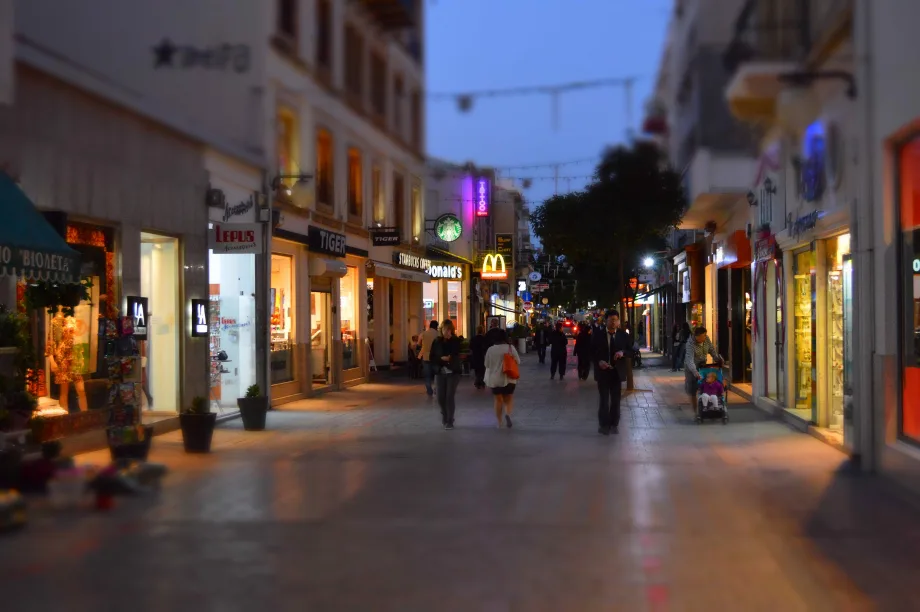
Treat Ledra Street as a walk in one direction: start at the Eleftheria Square end, move north with the shops and cafés on either side, and finish at the crossing point. Walking it this way means the monuments beyond the line come at the end, so you are not doubling back through the busiest stretch. The street is pedestrianised for much of its length, which keeps the pace easy even in a crowd.
The approach to the crossing is the part that makes the street unlike any other in Cyprus: the street narrows, the buffer zone opens up ahead, and the tone shifts from shopping to something more serious. Give yourself a few minutes here rather than treating it as a doorway. What lies on the far side is covered below.
The Ledra Street crossing point
The Ledra Street crossing point is the pedestrian checkpoint where the street meets the Green Line, the buffer zone that separates the Republic of Cyprus from the northern part of the island. It exists and it is on this street, at the northern end of the walk. Crossing rules, opening hours and what documents are accepted are set by the authorities on both sides and change; confirm them with the Republic of Cyprus authorities or your own foreign Ministry before you set out.
For planning purposes, the key decision is whether you cross or turn back. Crossing puts Selimiye Mosque, the Bedestan, Büyük Han and the Sultan's Library within a short walk; staying on the south side keeps the Byzantine Museum, the Archbishopric and Laïki Geitonia on your itinerary. Both are achievable in a day, but not comfortably in a single morning.

Selimiye Mosque and the Bedestan on the far side
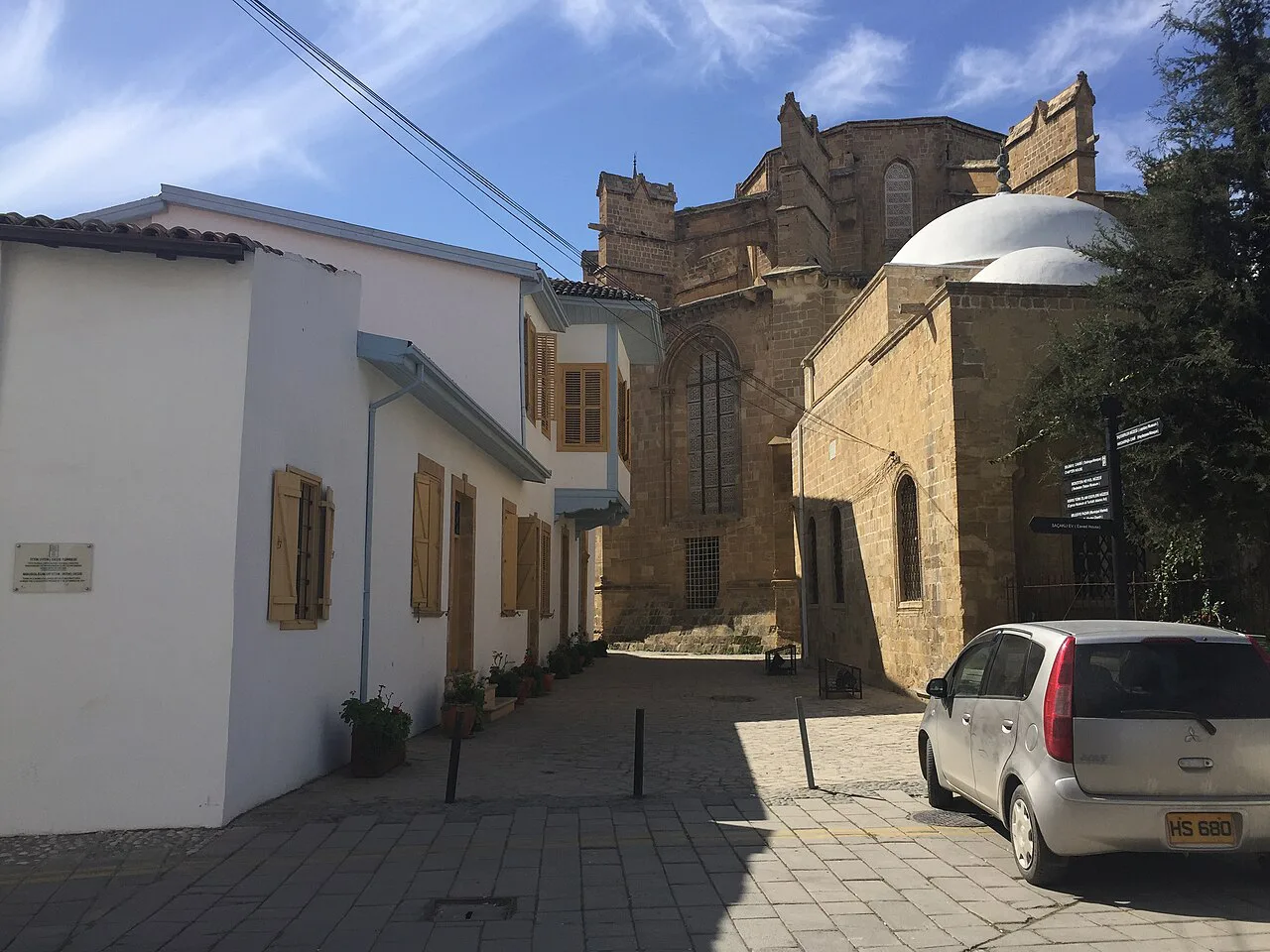
Beyond the crossing, the Latin Cathedral of St Sophia, now the Selimiye Mosque, is the largest and oldest surviving Gothic church in Cyprus, with interior dimensions of 66 by 21 m. Construction began under Frankish rule, possibly in 1209, and took about 150 years without ever being fully completed; the official inauguration came in November 1326. After the Ottoman conquest of 1570 it became a mosque and two minarets were added to the west end, and in August 1954 it was renamed in honour of Sultan Selim II.
Immediately south of the mosque stands the Panagia Odegetria, known as the Bedestan, a building that mixes Byzantine and Gothic features and served as a covered market for fabrics under Ottoman rule. A fifth-century basilica possibly occupied the site, the complex was probably the Orthodox Metropolitan Church in the 12th century, and the decorated Gothic north entrance dates from the end of the 15th century. The two monuments sit close enough together to see in one stop.
Büyük Han and the Sultan's Library
West of the Selimiye Mosque is Büyük Han, the Great Inn, built directly after the 1570 conquest, probably in 1572, under Muzafer Pasha. It has a square plan over two floors around a courtyard, with a marble entrance gate assembled from older building elements and a small octagonal domed mosque with a fountain added in the 19th century. It housed travelling merchants and pilgrims, and the courtyard is the reason to linger rather than pass through.
At the eastern end of the cathedral stands the Sultan's Library, a small three-domed building of 1829 from the reign of Sultan Mahmud II, once attached to a theological school that no longer exists. Its central hall is covered inside with an Arabic calligraphic poem by the then Mufti of Cyprus, Hasan Hilmi, and the collection holds Turkish, Arabic and Persian books and manuscripts, some sent from Constantinople. The four monuments together fill the northern half of a crossing day.
Nearby on the south side: the Byzantine Museum and the Archbishopric
Back on the southern side, the Byzantine Museum sits within the Archbishopric on Plateia Archiepiskopou Kyprianou and holds the richest collection of Byzantine art on the island, with over 200 icons from the 9th to the 19th centuries, sacred vessels, vestments and books. Its notable pieces include 12th-century icons and the 6th-century mosaics from Panagia Kanakaria at Lythragkomi, returned to Cyprus after illegal export from the occupied part of the island. It is listed as open Tuesday to Saturday, 09:30 to 17:00, all year, closing on public holidays; the individual ticket is €7, or €4 for groups of more than ten, with reductions for visitors up to 18 and for those aged 65 and over.
The Archbishopric square is a short walk from the southern end of Ledra Street, so the museum fits neatly either before or after the street walk. Because it closes on public holidays and can alter its times, it is the one stop on this route worth checking before you go.
How much time Ledra Street needs
Budget two hours for the street itself with a stop at the crossing, and half a day or more if you cross and work through the four northern monuments. The street is flat and compact, so the constraint is not distance but how many interiors you take in. A morning start leaves the afternoon free for the Byzantine Museum or the walls.
Summer heat is the honest trade-off: the walled city bakes in July and August, and the walk has little shade on the open stretches near the crossing. Go early, carry water, and plan the museum for the hottest part of the day, since it is indoors. Autumn and spring mornings are the most comfortable for the full crossing walk.
The free guided walk of the walled city
If the timing suits, the walled city has a free guided walking tour, organised by Lefkosia Municipality, the Deputy Ministry of Tourism and Nicosia Tourism Board, with English listed as the tour language and no charge. It starts and ends at the Old Town Hall on Eleftheria Square and runs about 2 hours 45 minutes, taking in the most noteworthy sights inside the walls. Dates and times are set by the organisers and announced separately, so confirm the schedule through the Deputy Ministry of Tourism information office on Aristokyprou 11 before you build a day around it.
Should you cross at Ledra Street?
Cross if you want the Selimiye Mosque, the Bedestan, Büyük Han and the Sultan's Library, all within a short walk of the checkpoint. Skip the crossing if your day is built around the Byzantine Museum's icons, Laïki Geitonia's townhouses and the Venetian Walls, which sit entirely on the southern side.
Whichever you choose, walk the street in one direction, start at Eleftheria Square, and carry your passport in case you decide at the line. Check the crossing rules and the Byzantine Museum's hours shortly before you travel, then use the rest of the attractions guide to plan the following day.
Explore more Nicosia guides
Frequently Asked Questions
What part of Cyprus is Nicosia in?
Nicosia, also called Lefkosia, lies practically in the centre of Cyprus and has been the island's capital since the Late Byzantine period. The walled old town, where Ledra Street runs, sits inside its 16th-century Venetian walls.
How do you pronounce Nicosia?
In English, Nicosia is usually said nih-KOH-see-uh. The Greek name Lefkosia is used on local signs and is the form most often written alongside it.